Evening Light Checklist: 8 Ways to Dim Your Home for Better Relaxation
Evening light is the quiet architecture of a calm home. Long before you feel sleepy, your body is reading cues: the color of the light, where it comes from, how bright it is, and whether it changes as the hours pass. A room that stays bright and white at 9 p.m. can feel like a subtle invitation to keep going. A room that softens after dinner gives you permission to stop.
The goal is not to sit in gloom or turn your living room into a cave. It is to make the shift from daytime brightness to evening softness feel deliberate. This checklist walks through eight simple adjustments, from the first switch you flip after dinner to the last pocket of light you leave on before bed. Treat it as a menu, not a test. A few small changes, repeated often, do more than a perfect setup you never use.
The 8-point evening light checklist
- Turn off overhead lights after dinner. Use lamps instead of the main ceiling fixture in the room where you spend the evening.
- Move light to table and floor lamps. Aim for light at shoulder height or lower, not from above.
- Choose warm bulbs. Replace cool white bulbs in lamps with warm white or extra warm white options.
- Put the lights you use most on dimmers or smart plugs. Lower the brightness in stages rather than all at once.
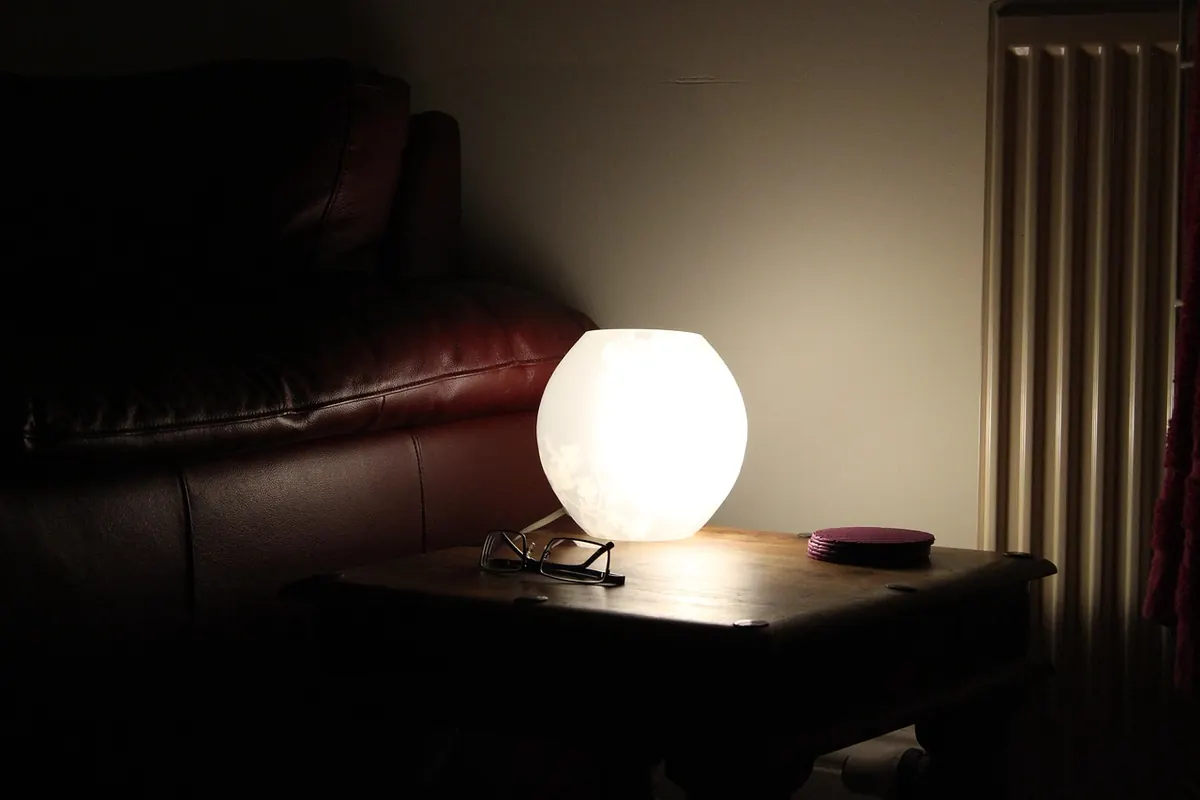
- Create one pool of light where you land. A reading chair, sofa corner, or kitchen counter should have its own soft, local light.
- Lower screen brightness and move devices out of reach. Keep phones and tablets from becoming the brightest objects in the room.
- Block stray light and soften reflections. Close curtains, angle lamps away from glossy surfaces, and shade bare bulbs.
- Set a reminder or timer for the change. A scheduled smart plug or a simple phone alarm can make the evening shift automatic.
Read the list once, then pick the two items that would make the biggest difference in your home tonight. The rest can wait.
Start with the ceiling, not the sofa
Overhead light is efficient, even, and very good at keeping a room alert. That is why it belongs to the daytime and early evening, not the last hour before bed. After dinner, make a habit of turning off the main ceiling light in the room where you spend your evening. If the room goes too dark, add a lamp rather than switching the ceiling back on. The change in atmosphere is immediate: corners become softer, faces are lit from the side rather than from above, and the room feels smaller in a good way.
A two-minute test
Stand in the doorway after dinner and look at the room. If the brightest thing you see is a ceiling fixture, turn it off. If the brightest thing is a lamp at shoulder height or lower, you are on the right track. Keep a small lamp near the sofa or kitchen counter so you do not have to walk through a dark room to find the switch. You are not trying to make the room dark; you are trying to make the light less commanding.
Warm the color and bring the light lower
Color temperature matters more than most people notice. Cool white bulbs, the kind that make a kitchen feel crisp and clean, can make a living room feel clinical at night. Warm white and extra warm white bulbs are easier on the eyes after dark and sit more naturally with wood, fabric, and skin tones. Check the label before you buy: you want a warm tone, not a blue-white one. If a bulb is too bright even when warm, use a lower-output bulb or a thicker shade rather than squinting.
Small swaps that make a difference
- Replace cool white bulbs in table and floor lamps with warm white ones.
- Add a fabric, paper, or linen shade to diffuse a bare bulb and soften the edge of the light.
- Choose a lower-output bulb for lamps that sit close to seating, so the light feels gentle rather than glaring.
- Put a small warm lamp on a kitchen counter or hallway table so you do not rely on overhead light while moving through the house.
- Use a dimmer-compatible bulb if the lamp is on a dimmer, and test it for flicker or buzz before settling in for the evening.
Dim in stages, not all at once
Your eyes adapt gradually, and the room feels better when the light changes gradually too. If you drop from full brightness to candlelight in one move, the room can feel jarring and you may be tempted to turn everything back on. A better approach is a slow descent: full lamps at dinner, half brightness during cleanup, and a lower setting when you sit down to read or talk. Dimmers are ideal, but smart plugs and lower-watt bulbs can do the same job in steps. If you have only one lamp, start by turning off the overhead light first, then switch the lamp to a lower setting an hour later.
Example: a three-step evening
- After dinner: ceiling light off, two lamps on at medium brightness.
- Cleanup done: one lamp lowered or turned off, the remaining lamp angled toward a wall or ceiling.
- Before bed: a single small lamp or nightlight left on in the hallway, with the living room dark or nearly dark.
This staged approach gives your body a series of gentle signals rather than a single abrupt change. It also makes the room feel different enough that you notice it, which helps the habit stick.
Create one pool of light where you land
A room lit evenly from every side can feel flat and alerting. A room with one clear pool of light feels intentional. Put the brightest lamp near the chair, sofa corner, or counter where you actually spend time. Light the task, not the whole room. If you read, angle the lamp over your shoulder or behind you so the page is bright but your eyes are not. If you talk, aim the light at a wall or shade it so faces are softly lit. A single pool of light also gives the eye somewhere to rest, which is part of what makes a room feel calm.
Keep screens from becoming the sun
Screens can undo a careful lighting setup in seconds. A phone at full brightness in a dim room becomes the brightest object in your field of view, and the contrast is what makes it feel harsh. Lower screen brightness after dinner, turn on night mode or a warm display setting if your device has one, and put phones and tablets out of arm’s reach during the part of the evening you want to protect. If you watch television, bias lighting behind the screen can soften the contrast between the bright screen and the dark wall. The goal is not to ban screens; it is to stop them from setting the light level for the whole room.
Block stray light and soften reflections
Stray light is any light you did not choose: a streetlamp through thin curtains, a bright clock face, a bare bulb in the hallway, a glossy table throwing a pool of glare across the room. Close curtains or blinds at dusk, especially in rooms where you sit in the evening. Angle lamps away from televisions, mirrors, and glossy surfaces. If a bulb is visible and too bright, add a shade or move the lamp so the bulb is hidden from eye level. Small fixes like these reduce the sharp points of light that keep a room feeling busy.
Make the shift automatic
The best evening light routine is the one you do not have to remember. A smart plug on a lamp can turn on at sunset and dim later. A simple timer can switch off a hallway light at a set hour. A phone alarm can remind you to lower the lamps or close the curtains. If smart devices are not your thing, pair the change with an existing habit: turn off the overhead light when you finish clearing the table, lower the lamp when you sit down, or close the curtains when you pour your after-dinner drink. The habit anchor matters more than the gadget.
A simple evening light routine
If you want a starting point, use this loose sequence. It is not a schedule to follow perfectly; it is a shape for the evening.
- At dinner: overhead light off, table lamp or pendant on at a moderate level.
- After cleanup: lower lamps to half brightness or turn off the brightest one.
- When you sit down: one pool of light near your chair or sofa, screens dimmed and moved away.
- An hour before bed: close curtains, turn off the television or lower its brightness, and leave only a small lamp or hallway light on.
- At bedtime: darken the room you are leaving, keep a low nightlight if you need one, and let the last light be warm and small.
Even doing two of these steps consistently can change how the evening feels. The routine is less about perfection and more about giving the day a visible ending.
Common mistakes that undo the dimming
- Replacing the ceiling light with a brighter lamp. The point is to lower and localize light, not simply move it.
- Using cool white bulbs in warm shades. The shade may soften the light, but the color can still feel clinical.
- Putting a lamp directly in front of a glossy screen or mirror. The reflection can be more distracting than the original light.
- Dimming everything at once. A sudden drop can feel harsh and make you want to turn the lights back up.
- Leaving phone brightness at daytime levels. A small screen can dominate a dim room.
- Forgetting the hallway and kitchen. A bright patch of light in the next room can leak into the room you are trying to calm.
None of these mistakes is fatal. They are simply places to check when the room still feels alert after you have turned off the overhead light.
Final light before bed
The last light you see before sleep should be low, warm, and easy to leave behind. A small lamp in the bedroom, a nightlight in the hallway, or a dim bedside light is enough. Avoid turning on a bright bathroom light at full strength if you can help it; a lower setting or a warm bulb makes the middle-of-the-night transition gentler. If you read in bed, use a small shaded lamp rather than the ceiling light, and turn it off when you are done rather than letting it burn. The evening light checklist is not about making your home dark. It is about making the light match the hour, so your body can follow the same quiet shift.
Evening light does not need to be elaborate. It needs to be lower, warmer, and a little more deliberate than the light of midday.
Start with the ceiling light tonight. Then choose one more item from the checklist and make it your default. Over a week or two, those small choices become the atmosphere of the room: less like a waiting area for the next task and more like a place where the day can end.
Photo: mzmatuszewski0 / Pixabay