Small apartments ask a lot of every square meter. The desk becomes the dining table, the sofa doubles as a guest bed, and the patch by the window holds whatever has not found a home yet. An evening corner works only if it does not demand a spare room. It can be a chair’s width of floor, a slice of wall, and a small surface you clear each night. The goal is not a magazine set. It is a place where your shoulders drop when you sit down, even if the laundry basket is two steps away.
Find the sliver of space that already wants to be used
Start by watching how you move through the apartment at night. The best corner is usually the one you pass without noticing: the end of the sofa, the recess beside a bookcase, the strip between the window and the wardrobe, or the quiet side of the bed. Avoid the main route from kitchen to bathroom, the zone in front of a closet, and any spot where a chair would make someone walk around you.
Measure the footprint before you fall for a piece of furniture. A compact chair and a small side table often need about a meter by a meter; a floor cushion and a tray need less. Mark the outline with painter’s tape and live with it for a day. If you keep stepping over the tape, the corner is in the wrong place. If the tape disappears into the background, you have found your spot.
Renters should think in terms of what leaves no holes: a floor lamp, a leaning shelf, a clamp light, a rug that defines the area. If you share the space, choose a corner that gives you privacy without making the room feel blocked. A small screen, a tall plant, or the back of a chair can create a soft edge without building a wall.
Choose a seat that earns its place
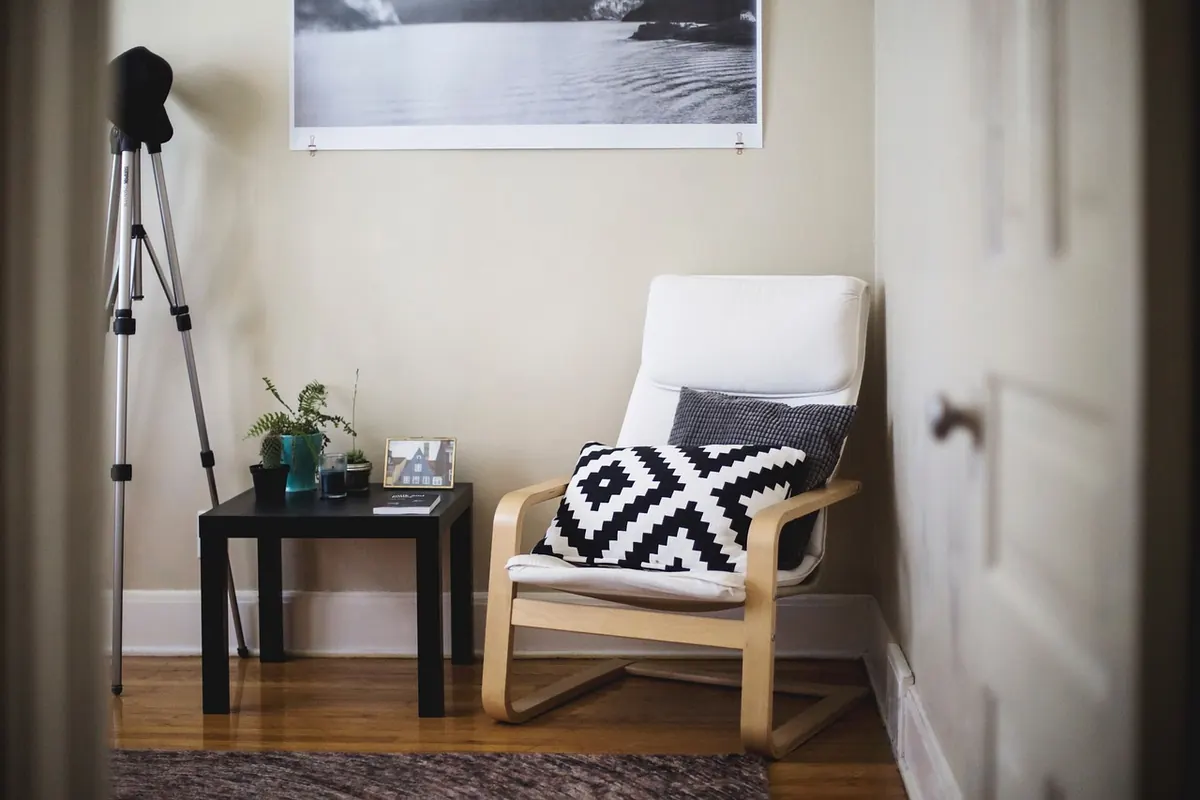
The seat is the one item worth measuring twice. A deep armchair can swallow a small room, and a recliner will not fit a corner that is already tight. Look for a slipper chair, a compact armchair, a folding chair with a good cushion, a bench with storage underneath, or a large floor cushion if sitting low suits you. The right chair lets you read for twenty minutes without shifting every three minutes.
Sit in it before you buy, if you can. Check the depth against your leg length, the arm height against how you hold a book or mug, and the width against the tape outline. If the chair has no arms, add a small stool for a cup. If it has arms, make sure a tray table can slide close enough to be useful.
Alternatives when a chair will not fit
A window seat made from a cushioned storage bench can do double duty. A floor cushion beside a low shelf works in a bedroom corner. A folding chair that lives behind a door and comes out after dinner is not a compromise if it is comfortable and easy to set up. The point is a reliable place to land, not a furniture showroom.
Layer light low and warm
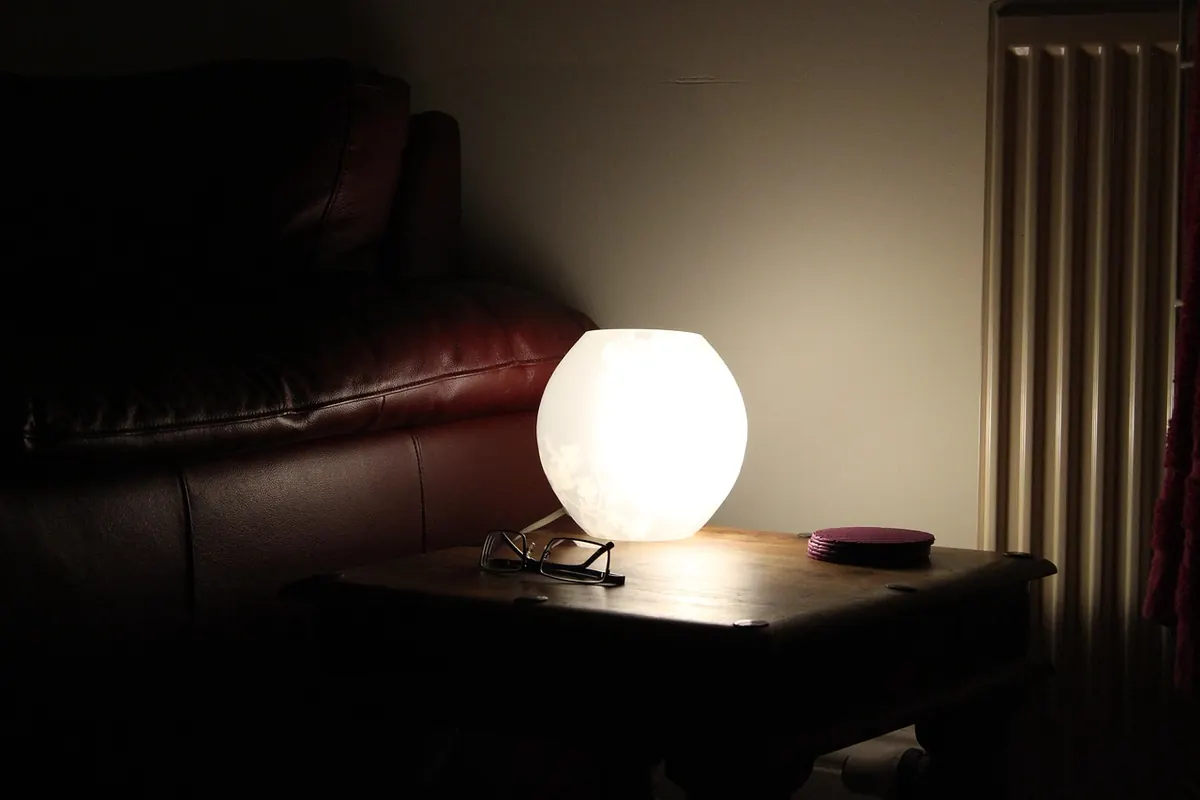
Overhead light is for cleaning and finding lost socks. For the evening corner, turn it off and build light in layers. One lamp behind your shoulder, one small light lower down, and perhaps a candle or a tiny accent light are enough. Warm bulbs—look for a soft, amber tone rather than a cool white—make skin, wood, and fabric look kinder. A dimmer or a smart plug helps you lower the light without rearranging the room.
Aim light at a wall or ceiling rather than into your eyes. A floor lamp with a shade that directs light upward creates a soft wash. A clamp lamp on a shelf can light a book without glare. If cords are a problem, run them along the skirting board and secure them with clips; do not drape them across a walking path.
A simple lighting recipe
- Turn off the ceiling light after dinner.
- Place one warm lamp behind or beside your chair, not in front of it.
- Add a second, lower light—a small table lamp, a shelf light, or a candle on a heatproof tray.
- Dim both until you can see comfortably but the room no longer feels like a task area.
Keep candles away from fabric, curtains, and papers, and never leave one burning when you leave the room or go to sleep. If you are sensitive to smoke or fragrance, skip the candle and use a dimmed lamp instead.
Build a sensory surface, not a clutter shelf
A small side table or tray gives the corner a purpose. Keep it sparse: three to five items that appeal to different senses, rotated when they stop feeling special. A mug, a book, a soft throw, a plant, a small speaker, a candle, a bowl for keys—choose what you will actually use, not what fills the surface.
- Scent: a candle, a diffuser, or a small sachet of dried lavender. Keep it subtle; strong fragrance in a small room can become oppressive.
- Sound: a compact speaker, a radio, or a playlist you associate with winding down. Keep the volume low enough that you can hear the room.
- Touch: a textured throw, a linen cushion, a smooth wooden tray, a warm mug. Texture does more for a corner than another decorative object.
- Taste: a teapot, a small cup, or a glass carafe. Having one drink you reserve for the evening makes the corner feel intentional.
- Sight: one thing worth looking at—a print, a plant, a view of the street, a candle flame. Avoid a busy gallery wall in a tiny corner.
If you are sensitive to fragrance or smoke, keep the corner unscented and lean on texture, sound, and light. A corner that irritates you is not restful, no matter how pretty it looks.
Set boundaries and hide the practical bits
Small apartments blur categories quickly. The evening corner becomes a charging station, then a mail drop, then a place for clothes that are not quite dirty. Stop that drift with a few simple rules. The corner is not a second desk. The laptop goes elsewhere after work. Mail goes in one basket, not across the table. A throw lives in a basket under the chair or over the arm, not in a heap on the floor.
Use vertical space without making the corner feel heavy. A narrow shelf above the chair can hold a lamp and a book; a hook on the wall can take a tote bag; a lidded box can hide cables and chargers. A small rug is useful here—not just for warmth, but because it marks the edge of the corner. When the rug ends, the rest of the apartment begins.
Make it a ritual, not a display
A corner works when you use it. Pick a cue: after the dishes are done, after the last email, after you change into softer clothes. Lower the main light, make one drink, and sit for ten minutes without a screen. The first few nights may feel awkward. That is normal. The corner becomes restful through repetition, not through perfect styling.
A five-minute reset
- Clear the side table and put stray items in their basket.
- Fold the throw and fluff the cushion.
- Turn on the warm lamp and turn off the overhead light.
- Choose one sensory item—scent, sound, or a book.
- Put your phone out of reach, even if only for one chapter.
If you live with someone, agree on the reset. One person’s quiet corner is another person’s convenient dumping ground. A shared rule—nothing on the chair, nothing on the tray after ten—keeps the space usable without turning it into a chore.
A small corner that works
You do not need a spare room to end the day well. Move one chair, add one warm lamp, clear one tray, and give the spot a simple job: sit, read, sip, breathe. Live with it for a week before you buy anything else. Notice whether you reach for the throw, whether the light lands in your eyes, whether the table is wide enough for a mug and a book. Adjust one thing at a time. A good evening corner is not the one that photographs best; it is the one you return to without thinking, because it makes the last hour of the day feel like yours.
Photo: karishea / Pixabay