Most sleep advice reads like a renovation plan: blackout curtains, a new mattress, a strict 9:30 lights-out, no caffeine after noon, a meditation practice. Some of it is genuinely useful. All of it is a lot to ask of a Tuesday. The good news is that sleep responds well to small, repeatable signals — the kind you can add to an ordinary evening without rearranging your life. What follows are ten of them, ordered so that each one makes the next easier. Take the ones that fit. Leave the rest for a week when you have more room.
Start With an Anchor, Not a Schedule
A fixed bedtime sounds disciplined and rarely survives contact with real life. A fixed wind-down time is more forgiving and does more work. Pick a point in the evening — say 10:15, or whenever dinner and the dishes are usually behind you — and treat that as the moment the day starts closing. Aim to keep it within a half-hour window rather than hitting an exact minute.
The reason this matters is that your body takes cues from sequence, not from the clock. If the last hour of the evening always looks roughly the same, the routine itself becomes the signal. You are not trying to be perfect. You are trying to be predictable enough that your brain stops bracing for another episode of something.
Dim the Room Before You Feel Tired
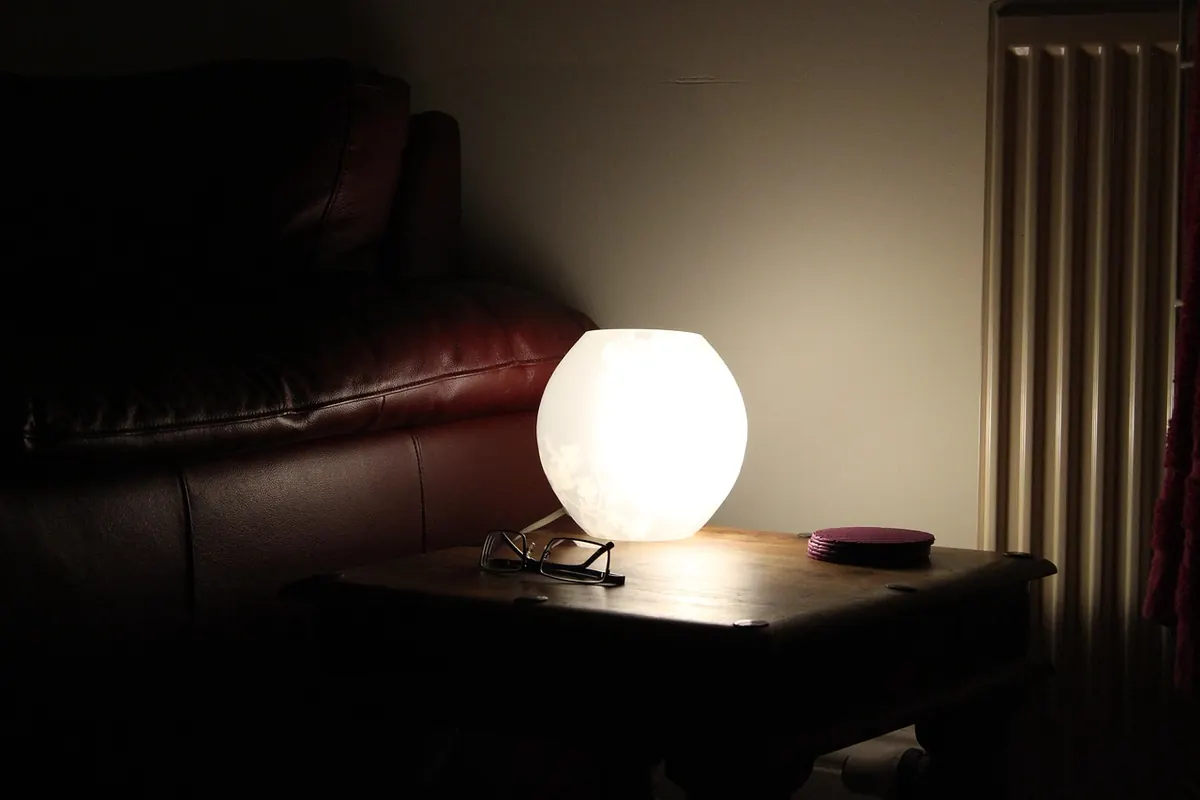
Bright overhead light at 9 pm tells your body it is still afternoon. You do not need a lighting system to fix this. After dinner, turn off the ceiling light and use one or two lamps instead — ideally at eye level or lower, with warm-toned bulbs. The room should look a little more like a restaurant at closing time than an office at midday.
Screens deserve the same treatment. Lower the brightness, turn on whatever warm or night mode your device offers, and put the screen further from your face than usual. You are not banning anything. You are simply removing the brightest thing in the room from the centre of your attention.
Close the Kitchen and the Inbox at the Same Hour
Two kinds of open loops keep people awake: the physical and the mental. Handle both at the same time and you buy yourself a quieter hour.
The kitchen
Rinse the mug, start the dishwasher, wipe the counter, decide what breakfast will be. It takes six minutes and means you will not be standing in front of the open fridge at eleven, negotiating with yourself. If you are genuinely hungry later, keep it small and dull — a piece of toast, a banana, a glass of milk — rather than a second dinner.
The inbox
Give email and messages a hard stop: one last look, then close the tab or sign out so reopening it takes deliberate effort. Anyone who truly needs you at 11 pm will still find you. Everyone else can wait until morning, and so can the version of you that answers.
Write Tomorrow Down So Your Brain Can Let Go
Unfinished thinking is the most common reason for a second wind at midnight. A two-minute brain dump handles most of it. Keep a pen and paper by the bed — paper is better here, because it does not invite you to check anything else — and write three things:
- Tomorrow's three tasks. Not the whole list. Three. Enough that your mind trusts you have not forgotten the important ones.
- The thing you are chewing on. A sentence is fine. Naming it is often enough to stop rehearsing it.
- Something you are looking forward to. A small, concrete thing — coffee, a walk, a phone call. It gives the day a welcoming shape.
If you wake at three in the morning with a thought, write it on the same page rather than lying there arguing with it. The page is doing the remembering so you do not have to.
Make the Bedroom a Little Cooler and a Lot Duller
Three variables do most of the work here, and none of them requires a shopping trip. Temperature: a room slightly cooler than your daytime comfort usually helps, so consider opening a window for ten minutes or turning the radiator down before bed. Darkness: close the curtains properly, and deal with the small lights you have stopped noticing — the standby light on the television, the charger by the bed, the strip above the door. A piece of tape or a folded cloth fixes most of them. Noise: steady background sound is easier to sleep through than intermittent sound, which is why a fan or earplugs beat silence in a busy street.
One more thing: keep the bed for sleep and intimacy. If you are lying awake and irritated for what feels like a long stretch, get up, sit somewhere dim with a boring book, and go back when you feel heavy again.
Give the Phone a Boring Place to Sleep
The problem with the phone is rarely the content and almost always the open-endedness. There is no natural stopping point, so you supply one. Charge it outside the bedroom if you can. If you rely on it as an alarm, set the alarm, switch on do-not-disturb, and leave the phone face down on a surface you cannot reach from the pillow.
If you like to read on your phone in bed, keep it in a reading app and out of the apps that refresh. Use a cheap alarm clock to break the habit of reaching for the screen first thing. Small friction, applied in the right place, beats willpower.
Have a Wind-Down Sequence You Can Repeat Half-Asleep
Rituals work when they are boring and always in the same order. Close the kitchen, brush your teeth, stretch for a few minutes, read four pages. A warm shower helps some people because the cooldown afterwards feels drowsy; a cool bedroom helps almost everyone. What matters is that the sequence is short enough to do on a bad night, and familiar enough that you stop deciding what comes next.
Skip novelty at this hour. New programmes, heated conversations and online shopping all ask for alertness. Save them for daylight, when your attention is cheaper.
The Ten-Point Checklist
- Set a wind-down time and keep it within a half-hour window.
- Turn off the ceiling light; use one warm lamp.
- Lower screen brightness and put the phone further away.
- Close the kitchen: dishes, counters, tomorrow's breakfast.
- Do one last inbox check, then sign out.
- Write down tomorrow's three tasks, one worry, one good thing.
- Make the room a little cooler than daytime.
- Cover or tape the small standby lights.
- Charge the phone outside the bedroom, or out of arm's reach.
- Repeat the same short wind-down sequence, in the same order.
Pick three and run them for two weeks before adding more. Consistency beats coverage, and a routine you actually repeat is worth more than a perfect one you abandon by Thursday. If you are struggling with sleep most nights, snoring heavily, waking gasping, or feeling dangerously tired during the day, talk to a doctor rather than tweaking your evening further — some sleep problems need more than a checklist, and this is general guidance, not medical advice.
Photo: Natthanon Chinnasri / Pexels